
Leading-edge erosion repair
- —Erosion assessment and mapping
- —Surface preparation and cleaning
- —Leading-edge protection (LEP) coating
- —Polyurethane tape systems
- —Post-repair quality inspection
Six specialised services covering the complete life cycle of a wind-energy project — from first measurement to long-term turbine care.
Met-mast and LiDAR campaigns up to 140 m. IEC 61400-12 and MEASNET-compliant.
Learn moreBankable P50/P75/P90 reports. WindPRO and WAsP modelling.
Learn moreMicro-siting, wake analysis, turbine-layout optimisation, noise and shadow studies.
Learn moreNoise impact, shadow flicker and EIA calculations to international norms.
Learn moreOwn stock of met masts, LiDARs, sensors and loggers. Ammonit dealer, ZX Lidars provider.
Learn moreBlade inspection and cleaning, rope access and high-altitude works for operating wind farms.
Learn moreWe plan, supply, install, operate and dismantle meteorological measurement systems for wind-resource assessment. Every campaign is designed from the outset to comply with IEC 61400-50-1 and MEASNET — the standards required by independent engineers and project-finance banks.
Our teams have installed over 100 met masts and LiDARs across Kazakhstan, Uzbekistan, Kyrgyzstan, Georgia, the UAE and Myanmar, including campaigns in remote desert, mountain terrain and sites with extreme icing.
We provide both short-term feasibility surveys and multi-year monitoring campaigns. All data is collected, validated and delivered in formats compatible with WindPRO, WAsP and other industry-standard software.
We produce energy-yield assessments using WindPRO and WAsP — the industry-standard tools accepted by international project-finance banks, independent engineers and energy regulators.
Our reports follow best-practice methodology: long-term wind-data correlation (ERA5, MERRA-2 and nearby met stations), site-specific wind-flow modelling, wake-loss calculation and full uncertainty analysis.
The output is a bankable EYA report that can be submitted directly to independent engineers and lenders as part of project-finance documentation.
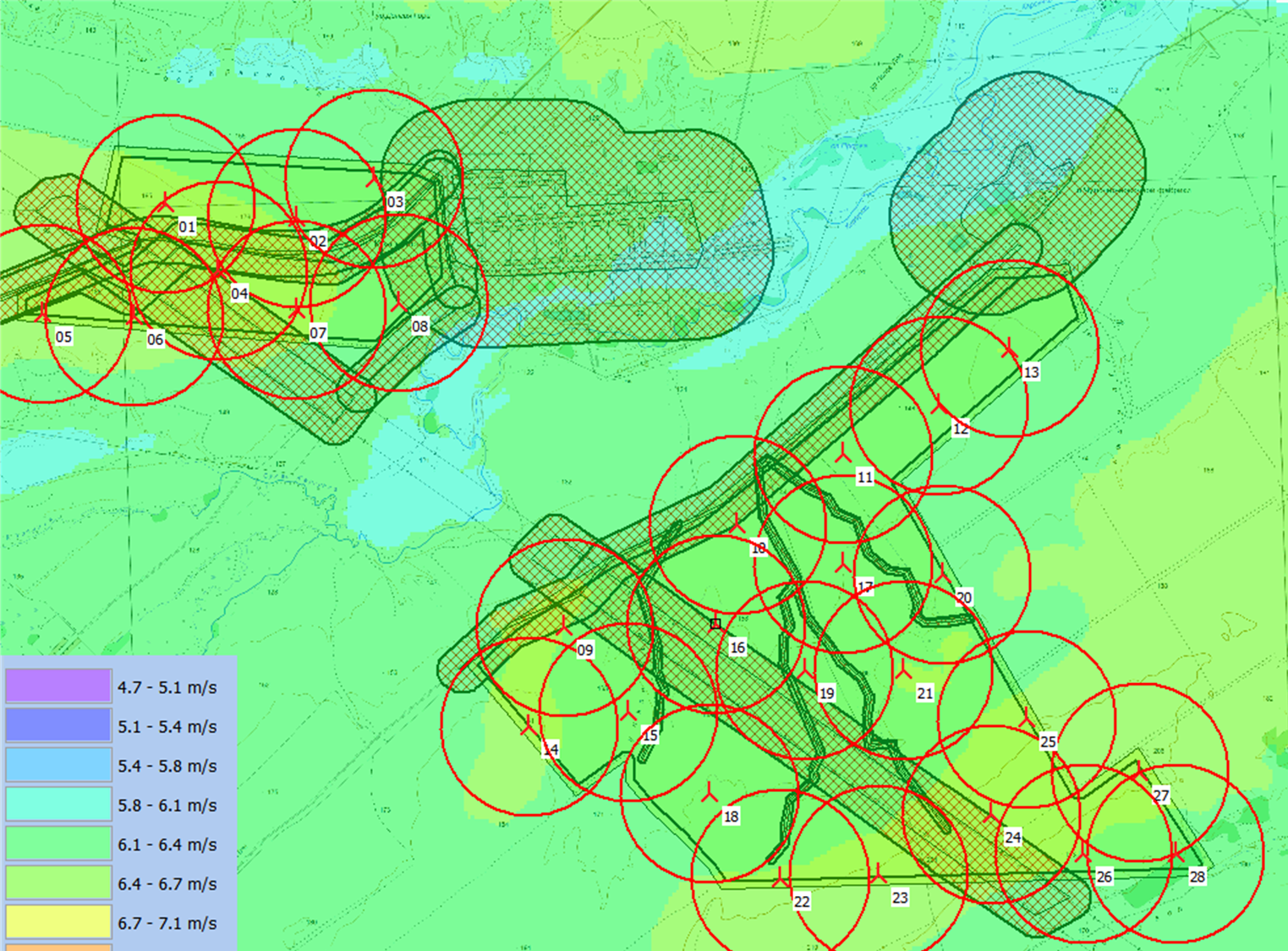
Micro-siting determines the optimal position of each turbine within the project area — balancing energy yield, turbulence exposure, construction feasibility and regulatory constraints.
We use WindPRO for layout optimisation, wake modelling and constraint analysis. Our designs account for infrastructure setbacks (roads, power lines, pipelines, buildings), sanitary noise zones, terrain slopes and civil-aviation requirements specific to Kazakhstan and Uzbekistan.
Environmental impact assessment for wind farms involves two primary calculations: noise propagation and shadow flicker. Both are performed in WindPRO and comply with international norms and local regulatory requirements in Kazakhstan and Uzbekistan.
Noise studies determine whether turbine sound levels at nearby receptors comply with the relevant limits. Shadow-flicker studies calculate the hours per year that rotating blades create flickering shadows at sensitive locations.
Noise-propagation modelling per ISO 9613-2. Sound-level contour maps at relevant receptors. Compliance check against local and international limits (WHO, IFC).
Annual shadow hours at sensitive receptors. Astronomical and meteorological shadow calculations. Identification of locations exceeding the 30 h/year threshold.
Preparation of technical sections for the Environmental Impact Assessment submission required for permitting in Kazakhstan and Uzbekistan.
We own and operate our measurement fleet — no third-party rental. Met masts, LiDARs, sensors, loggers and autonomous power systems are available from stock for rapid mobilisation.
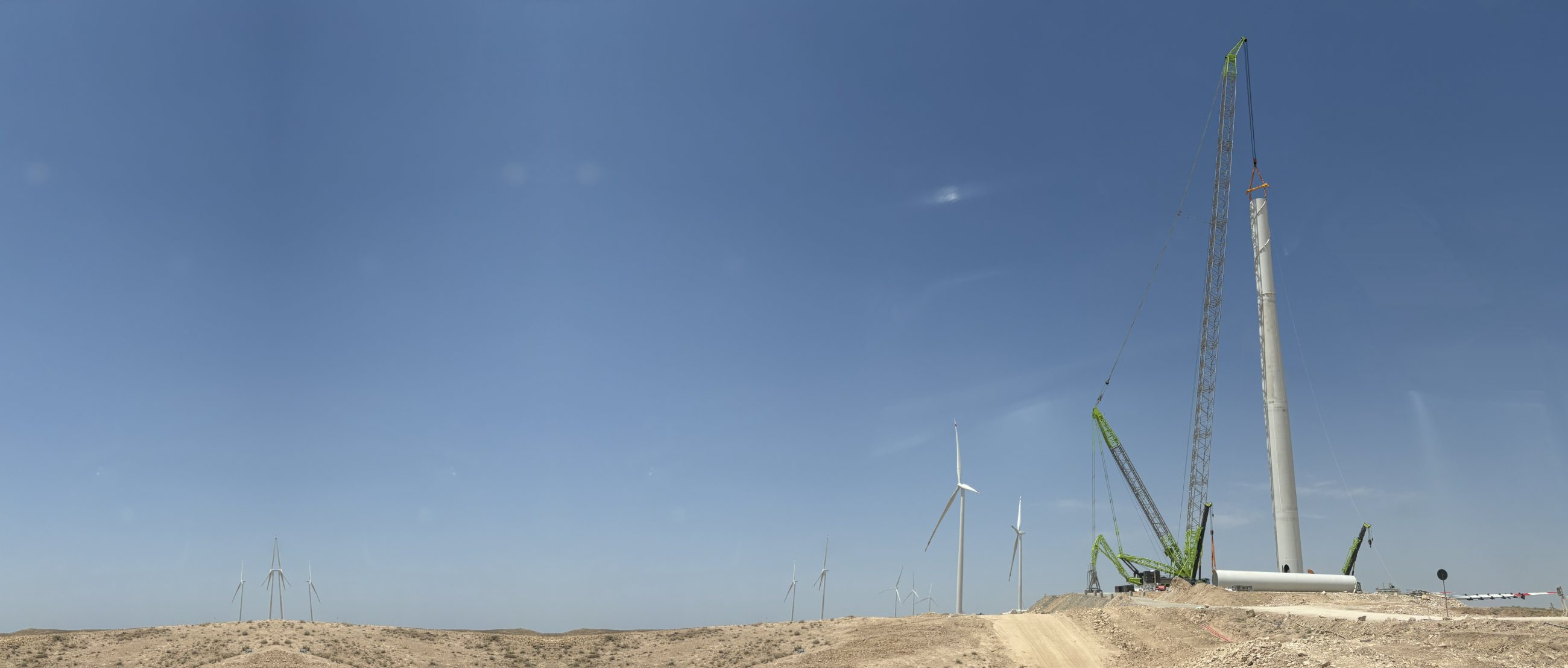
Our high-altitude specialists carry out blade inspection, repair and rope-access works on operating wind turbines — full-scope maintenance using OEM-compatible repair systems and certified procedures, for wind farms across Central Asia.
Whether you need a measurement campaign, energy-yield assessment or turbine blade repair — our team responds within one business day.